One of the reasons so many of us loved The Legend of Korra was because everything about the show–the world, the characters, the art, the plots–felt rich. The people and places of Korra were so well-developed it’s almost as if they were real. It’s not an easy feat to create a show with so much dimension. Today I’m going to break down some of the techniques the creators used to reach this level of depth and texture.
Texture in Character
Texture can appear anywhere: in characters, sets, costumes, dialogue, animation, and so on. Let’s look at two of my favorite characters, the brothers Mako and Bolin, to see how they were given texture.

Mako and Bolin
We can all recognize when a character feels flat or one-dimensional. But how do you go about giving characters dimension? I wasn’t in the Legend of Korra writers’ room (except in my dreams), but I imagine that the show’s creators answered character questionnaires–like these from Gotham Writers Workshop–about all their main characters. That’s a great first step to developing your characters (and if you don’t do it formally on paper, at least do it in conversation with your writing partners).
But characters really come to life when you give them space to surprise you. You must let them break the mold of their character questionnaire.
Consistency vs. Variation
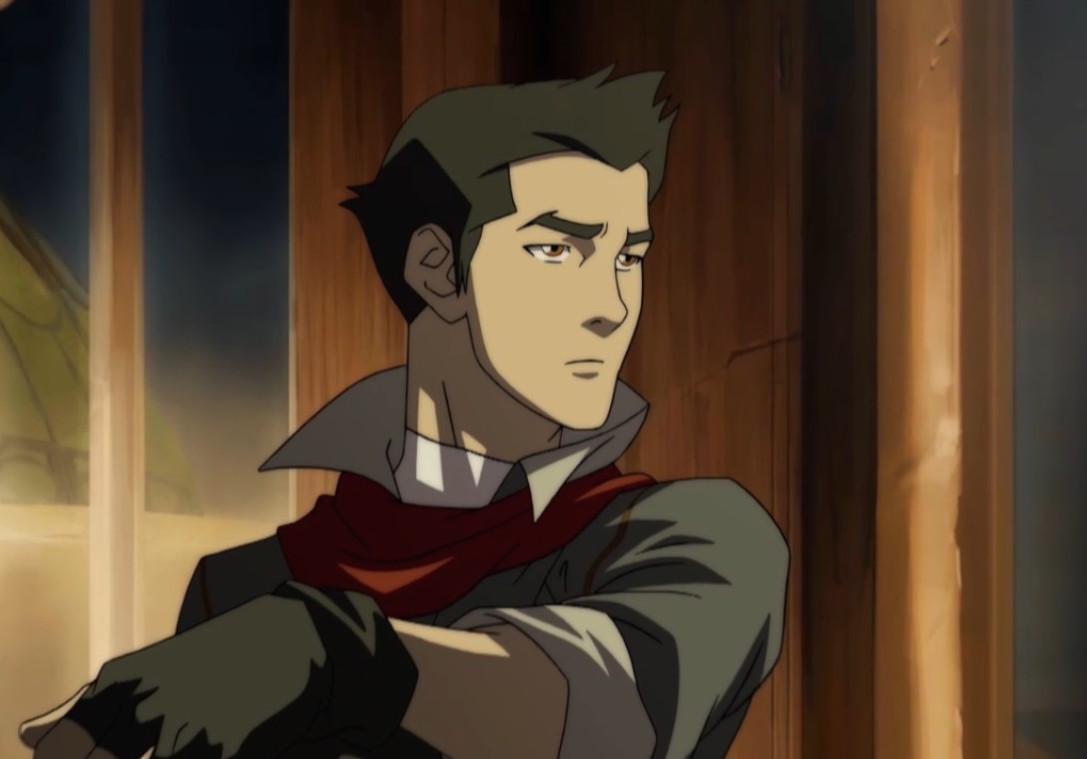
They key is to give your characters grounding in some consistent character traits while allowing them to be human. For example, Mako is quiet, serious, and brooding while Bolin is goofy and spontaneous. However, they are not ONLY those things. If Mako and Bolin went around being nothing but serious and goofy all the time, they’d be second-rate sidekicks. What gives them dimension is BOTH their consistency AND their variation from their central traits.
For example, Mako has a short temper. He often has bouts of fiery anger that go against his usual calm self. He can also be extremely tender around women, letting his emotional sides show. But at the end of the day, Mako always comes back to his centered, thoughtful self.
Bolin, on the other hand, loves to laugh and never shies away from expressing himself. He’s a great foil to his brother. But Bolin isn’t only comic relief. He shows his tender and thoughtful sides when he talks to his girlfriend Opal, or when he decides to turn against Kuvira. We saw Bolin mature over the course of the series, going from a brash and self-centered player to a more serious man of politics.

Mako and Bolin’s central character traits help them feel grounded. But if they were too consistent, they wouldn’t feel human. It’s a delicate balance to strike, and it’s the key to creating textured characters.
Depth
Mako and Bolin get even more interesting when you consider their relationships to one another and to their family. We learn early on that these two boys were orphaned. For the first two seasons of Korra, it appears that Mako and Bolin have no family. But then, in season 3, the brothers go to Ba Sing Se, where they meet their enormous extended family. A great reversal!

The writers weren’t content to say Mako and Bolin are orphans, let’s leave it at that. They recognized that every orphan has his own story. They dug deeper by asking:
- How did Mako and Bolin’s parents die?
- How did their parents get together in the first place?
- What brought them, an earth bender and a fire bender, to Republic City?
- Where are the families that they left behind?
- Is it possible their families are still alive? Can Mako and Bolin meet them?
Yes! Mako and Bolin can meet their long-lost family. This was a stroke of brilliance because it gave the boys a history. It connected them to the realities of society and geography in their world.

An old letter and photograph from Mako and Bolin’s father
Nothing exists in a vacuum. It’s not enough to pigeonhole your characters. Dig deeper. How did they get that way? What forces in the world brought them to where they are today?
The Beifongs

As a closing exercise, let’s take a look at a different family. In season 1, we met Lin Beifong, who was an interesting character in her own right. Again, I wasn’t in the writer’s room, but I imagine the writers asked themselves these questions:
- How did Lin become the person who she is?
- What family dynamics in her childhood made her so hard and unforgiving?
The answer they came up with: Lin had a half-sister, Su, who was a bit of a floozy. Lin and Su were polar opposites who fought for the attention and respect of their mother. In a major family incident, Su was arrested and Lin was left to clean up the mess. But the writers didn’t stop there. They asked:
- Where is Su now?
- Are Lin’s feelings resolved?
- If these sisters were to meet today, what would their relationship be like?
As soon as they started digging deeper, they realized they had a story there. By asking the right questions, the creators revealed depth in their fictional world.
The creators built out Su’s life and came up with this family tree.

The Beifong Family Tree
It was a risky move to introduce so many new characters in season 3, especially since they were only distantly related to one of the adult side characters (Lin). And it must have been a daunting task to breathe life into all of them.
But the writers pulled it off, and brilliantly. They spent the time developing each of the Beifongs into fully-fleshed out people. Su, Baatar Jr., and Opal all turned out to be complex characters with their own nuances. They all show texture through consistency and variation. Baatar Sr., Huan, Wei, and Wing were side characters, so it’s okay that those characters were more one-dimensional.
By weaving this large family into the fabric of Korra’s world, the show creators made a rich, vibrant, and textured tapestry.
For my closing argument, I give you this image of Huan, the artist, studying his sculpture.

A brilliant image because you can see all of the different characters expressed through their faces. Korra’s compassion. Su’s warmth. Bolin’s cluelessness. Lin’s hardness.
This is why we love The Legend of Korra. Because the writers, designers, and animators never got lazy. They used every line of dialogue and every frame of animation to reveal the humanity of their characters and their world.
Thank you for taking this journey with me!
 The Art of the Story
Pingback: The Legend of Korra | The Art of the Story